

Color, bleach, flat irons, blow-dryers, sun and even hard water all take a toll. The result is hair that feels rough, tangles easily, frizzes and splits at the ends. Regular conditioner helps day to day, but when hair is truly dry and damaged it needs something richer. That's where a hair mask for dry, damaged hair, also called a deep conditioner, comes in. Here's how to choose one, how to use it, and how often.
Hair mask vs. conditioner: what's the difference?
A conditioner is designed to work in a minute or two. It smooths the outer layer of the hair (the cuticle) so hair detangles and feels soft right away. A hair mask, sometimes called a deep conditioner or hair masque, is a more concentrated treatment with a higher level of oils, butters and proteins, and it's meant to stay on longer. That extra time lets it soften, smooth and strengthen hair more deeply, which is exactly what dry or over-processed hair needs.
Signs your hair needs a deep conditioning mask
- Ends feel straw-like or look frayed and split.
- Hair tangles easily and snaps when you comb it.
- Frizz shows up even on dry days.
- Color fades quickly and hair has lost its shine.
- Hair stretches and doesn't bounce back when wet, a sign it has lost elasticity.
If two or more of these sound familiar, a weekly mask should be part of your routine.
Ingredients to look for: argan oil, keratin and more
Damaged hair needs both moisture and strength. Look for a balance of nourishing oils and repairing proteins:
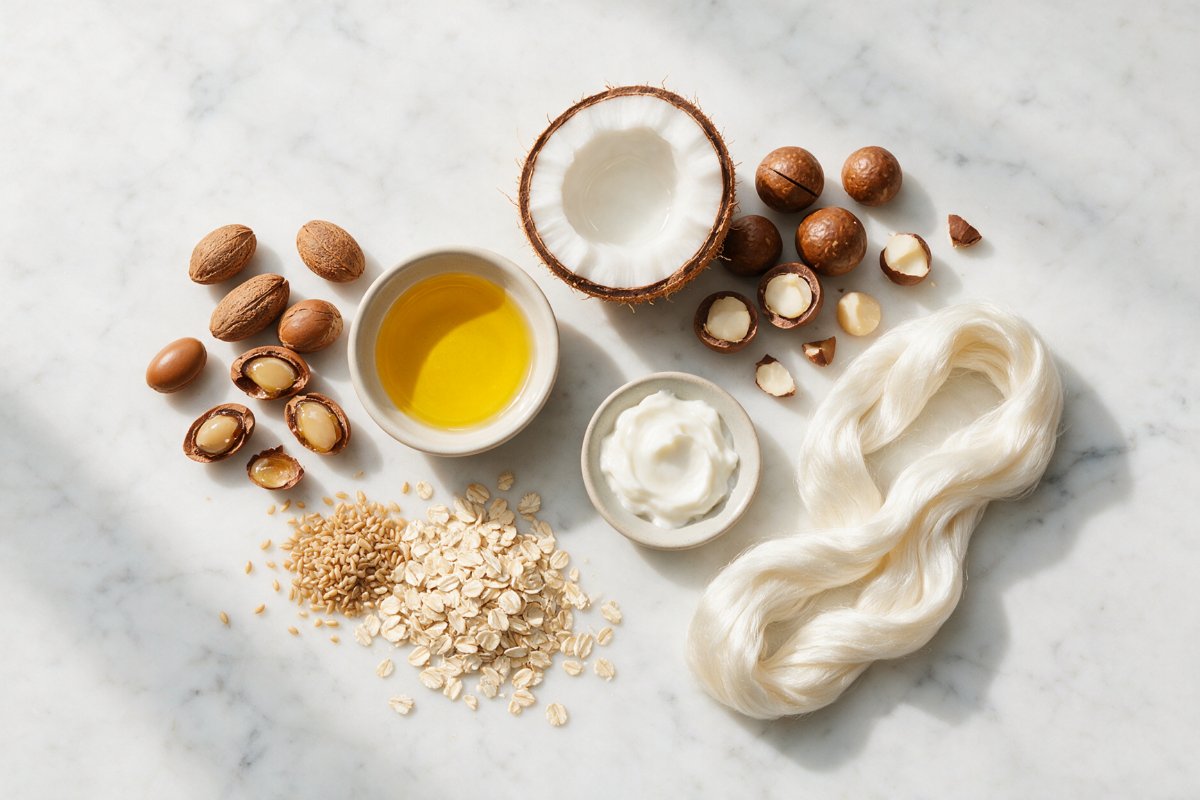
- Argan oil: rich in fatty acids and vitamin E, it softens and adds shine without a greasy feel.
- Coconut and macadamia oils: lock in moisture and smooth rough, dry ends.
- Keratin: the protein hair is made of. In a mask it fills in weak spots along the strand to help reduce breakage and split ends.
- Silk amino acids: add slip and smoothness, making detangling easier.
- Bentonite clay: balances all that richness so hair feels clean and light, not coated.
Our L'emarie Nutritive Repair Hair Mask combines all of these: Moroccan argan, coconut and macadamia oils with keratin, silk amino acids and bentonite clay, plus wheat germ, almond oil, oat oil, aloe vera, biotin and nettle.
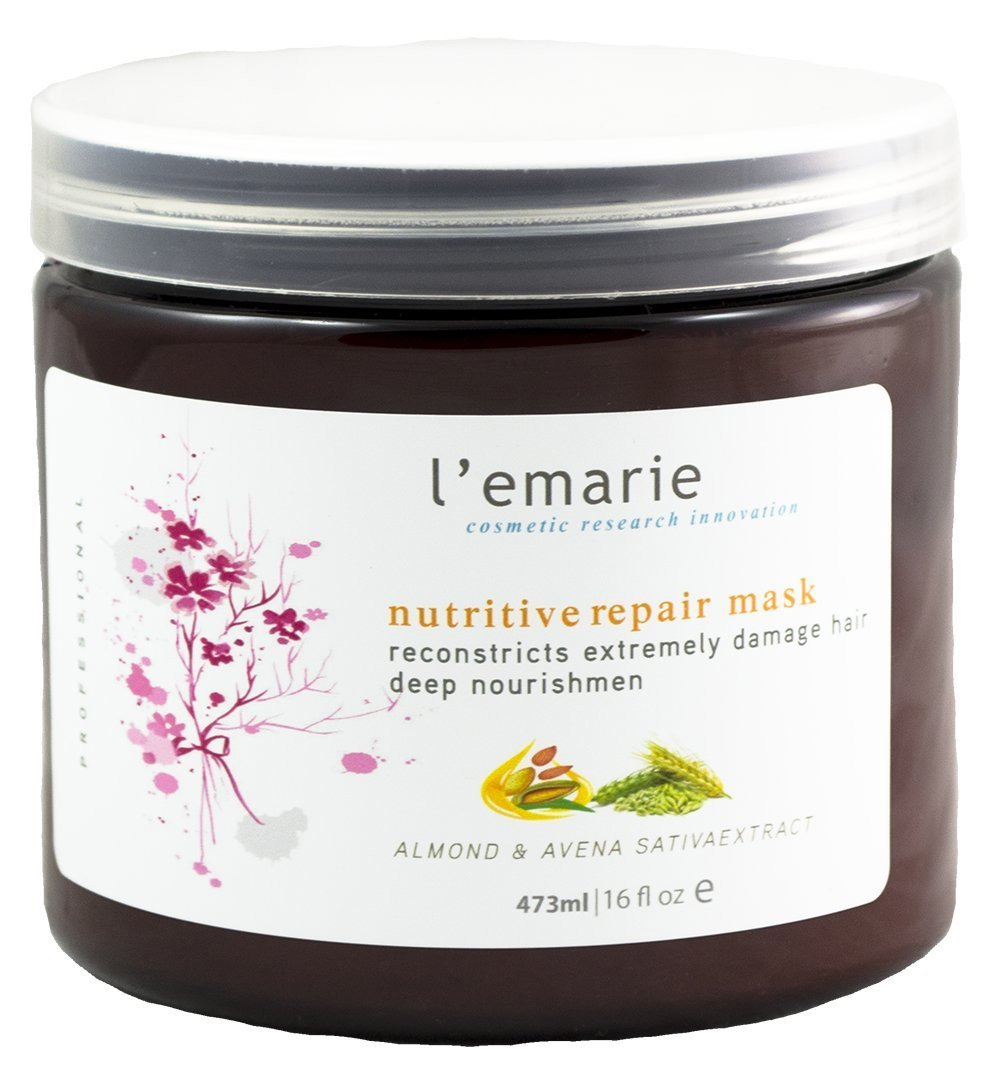
The Nutritive Repair Hair Mask comes in 9 oz and 16 oz sizes.
How to use a hair mask, step by step
- Shampoo first. A mask works best on clean hair. Use a gentle shampoo; for dry or color-treated hair, the Pomegranate Sulfate-Free Smoothing Shampoo is a good match.
- Squeeze out excess water. Hair should be damp, not dripping, so the mask isn't diluted.
- Apply generously from roots to ends, concentrating on the driest, most damaged areas, usually the ends.
- Comb it through with a wide-tooth comb so every strand is coated.
- Leave it on for 5 to 10 minutes. For an extra boost, cover hair with a shower cap; the warmth helps the mask soak in.
- Rinse well with cool or lukewarm water to help smooth the cuticle and boost shine.
How often should you use a hair mask?
It depends on how damaged your hair is:
- Very dry, bleached or over-processed hair: 2 to 3 times a week, or use the mask in place of conditioner after every wash until hair feels healthier.
- Color-treated or regularly heat-styled hair: once or twice a week.
- Normal hair that's a little dry: once a week as a deep treatment.
The Nutritive Repair Hair Mask is non-greasy, so it can be used as often as your hair needs without heavy buildup.
Tips to keep damaged hair looking healthy between masks
- Seal in moisture after washing. A leave-in like the Overnight Repair Leave-In Serum keeps working while you sleep.
- Protect from heat. Lower the temperature on hot tools and never flat-iron damp hair.
- Trim split ends regularly. No product can permanently fuse a split end; trimming stops the split from traveling up the strand.
- Sleep on silk or satin to cut down on friction, tangles and frizz.
- Try a different mask for a change. The Wheat Germ & Coconut Hair Mask with argan, macadamia and jojoba oils is another rich option for very dry hair.
Shop the routine: Nutritive Repair Hair Mask · Pomegranate Sulfate-Free Shampoo · Overnight Repair Leave-In Serum · Shop all Hair Masks
Frequently asked questions
Can I leave a hair mask on overnight?
For this mask, 5 to 10 minutes is enough, and longer doesn't add much. If you want an overnight treatment, use a leave-in made for it, like the Overnight Repair Leave-In Serum.
Should I use conditioner after a hair mask?
No. The mask replaces your conditioner on the days you use it.
Is a hair mask good for color-treated hair?
Yes. Color-treated hair loses moisture faster, and a weekly deep conditioning mask helps restore softness, shine and manageability.
Will a hair mask make fine hair greasy?
Not if you apply it mostly from mid-lengths to ends and rinse well. The Nutritive Repair Hair Mask includes bentonite clay so hair feels clean and light.
Which size should I buy?
Try the 9 oz if you're new to the mask. If you use it weekly or have long hair, the 16 oz is better value.
The photos of people and ingredients in this article were created with AI.